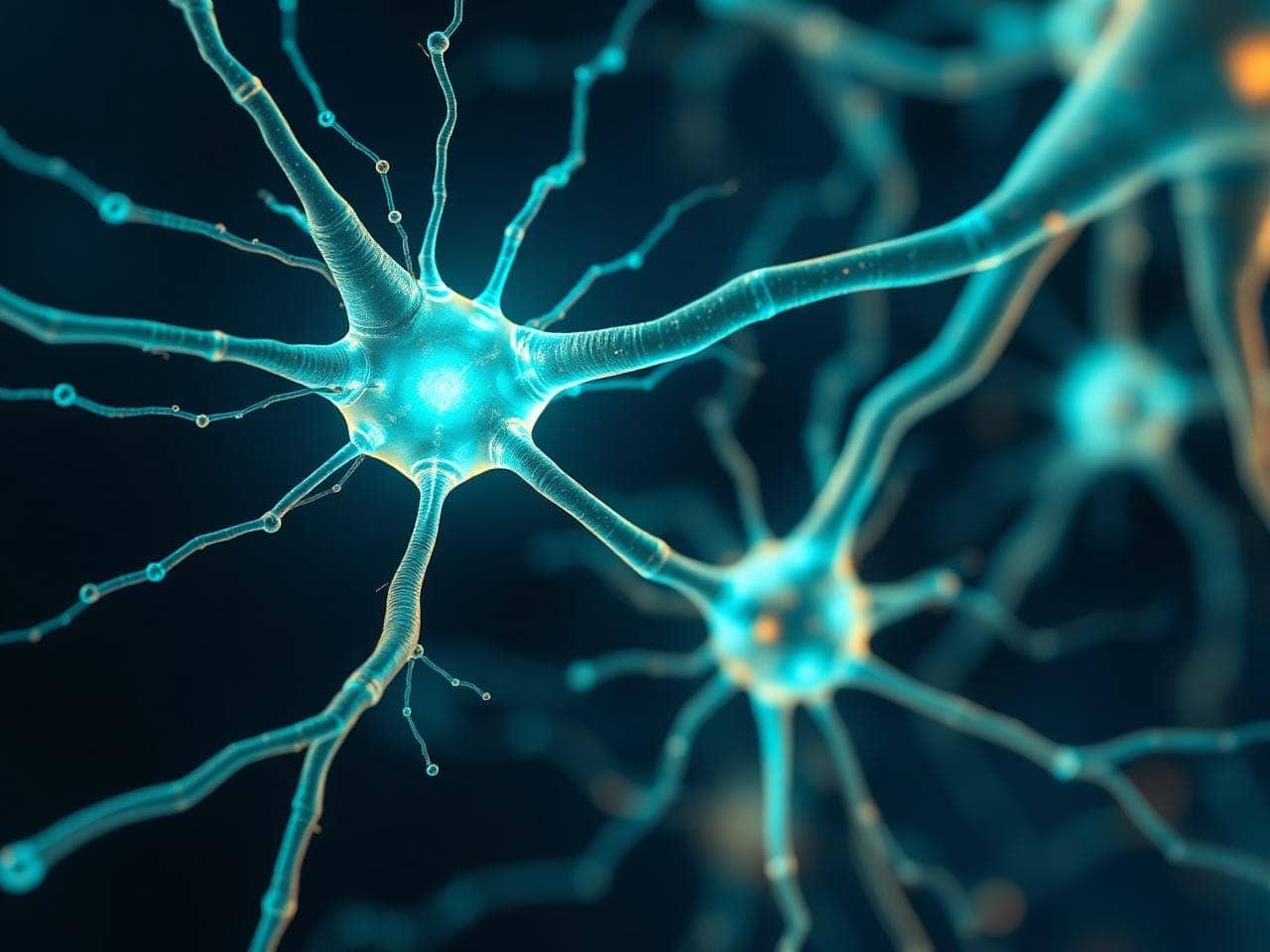
Stem Cell Therapy for MS
GMP-expanded Wharton's jelly mesenchymal stem cells for relapsing-remitting and progressive multiple sclerosis — IV and intrathecal protocols, fully characterized dosing, evidence-based approach at our Istanbul clinic.
Living with multiple sclerosis?
Submit your recent MRI, EDSS, and DMT history for a free, written candidacy assessment from our Istanbul neurology team.
MSC Therapy for Multiple Sclerosis
Multiple sclerosis is a chronic autoimmune disease in which the immune system attacks the myelin sheath protecting nerve fibers in the central nervous system. Mesenchymal stem cell (MSC) therapy targets MS through three converging mechanisms: immunomodulation (calming the autoreactive immune response), neuroprotection (preserving surviving oligodendrocytes and axons), and signaling support for endogenous remyelination.
At TurkeyStemcell we use allogeneic Wharton's jelly umbilical cord MSCs — the youngest and most potent MSC source — expanded under cGMP conditions in an ISO-accredited Istanbul facility. Every dose is released only after a full panel of identity, viability, sterility, endotoxin, and mycoplasma testing. You receive the exact cell count and viability data of your batch.
Treatment combines IV infusion with intrathecal injection in selected patients, with optional MSC-derived exosome adjuncts. The full protocol is completed during a single 5–7 day visit to Istanbul, with 12 months of remote follow-up from our medical team.
How MSCs Work in MS
Four documented mechanisms — each supported by peer-reviewed published evidence in MS-specific MSC trials.
Immunomodulation
MSCs downregulate autoreactive Th1 and Th17 cells driving MS demyelination, while expanding regulatory T-cells that restore immune tolerance.
Neuroprotection
Paracrine release of BDNF, NGF, and GDNF supports oligodendrocyte survival and protects axons from inflammatory damage.
Remyelination support
MSC-derived growth factors and exosomes signal endogenous oligodendrocyte precursor cells to mature and remyelinate damaged axons.
Anti-inflammatory cytokines
Documented secretion of IL-10, TGF-β, and IDO reduces neuroinflammation in CNS lesions and the blood-brain interface.
Treatment Protocol in Istanbul
A standard MS treatment requires 5–7 days. Here's what a typical visit looks like.
| Day | Activity |
|---|---|
| Day 1 | Arrival in Istanbul, airport pickup, hotel check-in, evening medical intake. |
| Day 2 | Neurological assessment, labs, EDSS scoring, MRI review, treatment plan finalization. |
| Day 3 | First IV infusion of GMP-expanded Wharton's jelly MSCs (typically 100–200M cells). |
| Day 4 | Intrathecal MSC injection under fluoroscopic guidance (where indicated and consented). |
| Day 5 | Second IV infusion, MSC-derived exosome adjunct, post-procedure observation, departure briefing. |
Who Is a Good Candidate?
- Confirmed diagnosis of relapsing-remitting (RRMS), secondary-progressive (SPMS), or selected primary-progressive (PPMS) MS.
- EDSS score between 1.5 and 7.5, with reasonable baseline function.
- Stable or worsening despite current disease-modifying therapy (DMT), or seeking a regenerative adjunct.
- Fit to travel and tolerate IV infusion and (where consented) intrathecal injection.
Active malignancy, severe infection, pregnancy, and recent use of certain DMTs (e.g. alemtuzumab within 12 months) require individual medical assessment. We do not promise cure or halting of MS progression — outcomes vary by subtype, disease duration, and baseline function.
Frequently Asked Questions
Discuss MS Treatment with a Specialist
Send us your recent MRI, EDSS, and DMT history. Our medical team will give you a free, honest assessment of candidacy and a personalized protocol plan.
Or call directly: +90 534 856 92 92