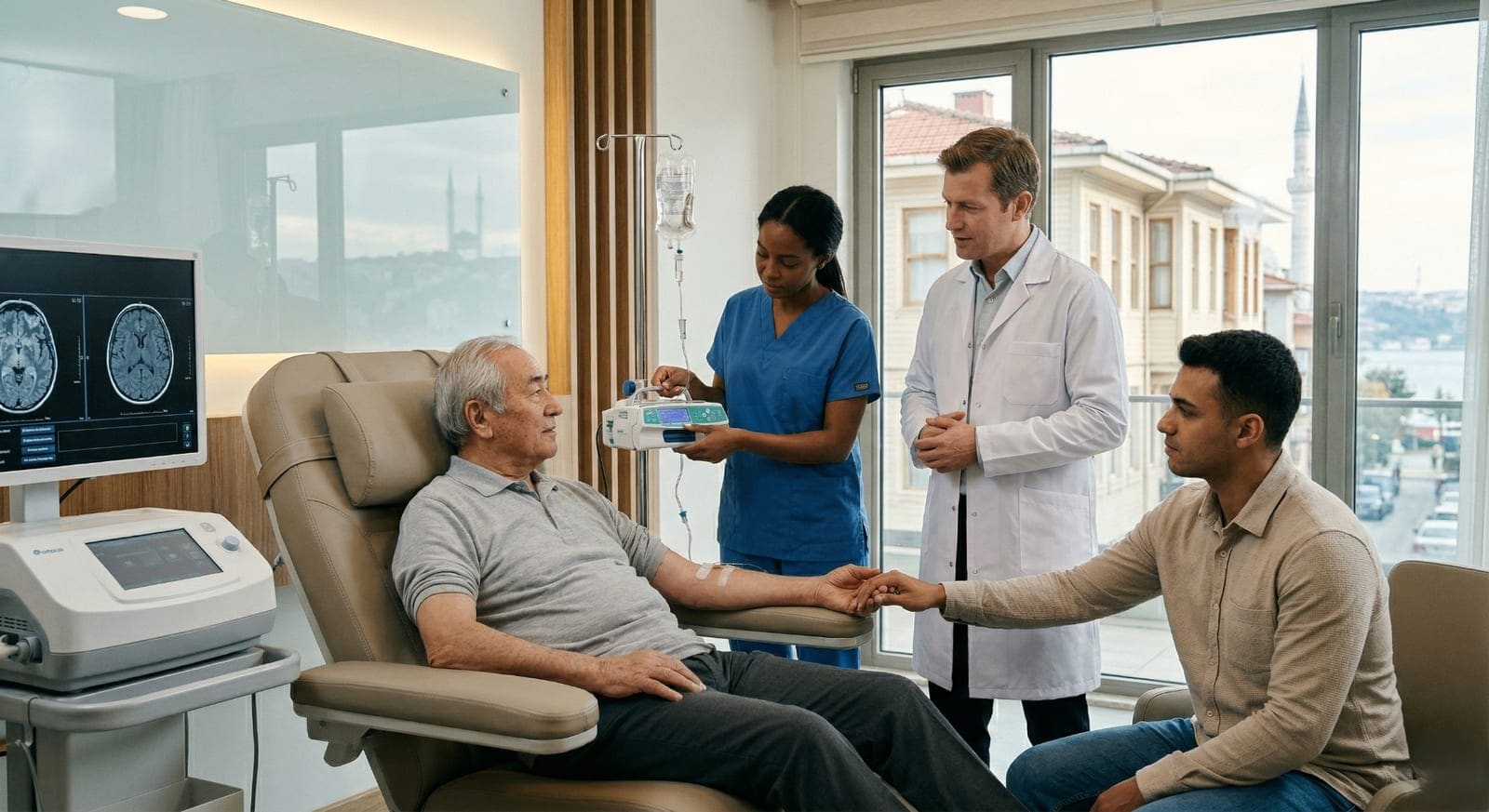
Understanding Post-Stroke Recovery
Stroke is one of the leading causes of long-term disability worldwide. Even after emergency treatment and acute hospital care are complete, many survivors are left with persistent neurological deficits that interfere with independence, communication, mobility, and daily life.
Common post-stroke challenges include weakness on one side of the body, speech difficulties, swallowing problems, balance impairment, spasticity, fatigue, slowed cognition, reduced hand function, and difficulty returning to normal routines. Some patients improve steadily with rehabilitation, while others reach a frustrating plateau.
This is why many families begin exploring mesenchymal stem cell therapy and exosome therapy as regenerative strategies aimed at supporting the brain's recovery environment rather than simply waiting for spontaneous improvement alone.
Why Recovery After Stroke Can Plateau
Stroke recovery is limited not only by the initial brain injury itself, but also by the biological environment that follows it. After a stroke, the brain may face inflammation, disrupted blood flow, altered signaling between neurons, scar-like inhibitory changes, and loss of efficient communication between surviving neural circuits.
In the earliest phase, the priority is survival and stabilization. Later, the priority becomes rehabilitation and adaptation. But many patients want to know whether the post-stroke environment itself can be supported more aggressively. That is the main reason interest in regenerative medicine for stroke recovery continues to grow.
Common Challenges After Stroke
Patients seeking post-stroke stem cell therapy in Turkey often present with a combination of physical, cognitive, and functional limitations:
Motor Weakness and Hemiparesis
Many stroke survivors continue to struggle with arm weakness, leg weakness, reduced hand use, and impaired gait long after the acute event.
Speech and Communication Issues
Post-stroke patients may experience aphasia, dysarthria, slowed processing, or difficulty expressing and organizing language.
Spasticity and Functional Limitation
Muscle stiffness, abnormal tone, and limited range of motion can reduce independence and make rehabilitation slower or more difficult.
Fatigue and Cognitive Slowing
Persistent fatigue, reduced attention, mental slowness, and executive difficulty can remain major barriers to quality of life after stroke.
How Stem Cells May Support Stroke Recovery
Mesenchymal stem cells (MSCs) are studied after stroke because they may affect several recovery-relevant pathways at the same time. The goal is not to claim reversal of destroyed brain tissue. The real scientific interest is whether regenerative signaling can improve the conditions in which the remaining brain tissue tries to recover and reorganize.
- Neuroprotective factor secretion such as BDNF, GDNF, and VEGF that may support a healthier recovery environment
- Promotion of angiogenesis that may help improve microvascular support in affected brain regions
- Modulation of post-stroke neuroinflammation and inflammatory signaling
- Support for synaptic plasticity and functional reorganization of surviving neural circuits
- Signaling that may reduce inhibitory scarring and improve the environment for recovery-oriented adaptation
- Potential support for endogenous repair pathways and rehabilitation responsiveness
Neuroplasticity Support
One of the biggest reasons patients explore stem cell therapy for stroke recovery is the possibility of supporting neuroplasticity, the brain's ability to reorganize function through surviving pathways and repeated rehabilitation.
Inflammation Modulation
Persistent post-stroke neuroinflammation may continue to affect neuronal signaling and recovery potential. Regenerative therapy is being studied in part because of its anti-inflammatory and neuro-supportive signaling profile.
Rehabilitation Synergy
Many families are not looking to replace physiotherapy, occupational therapy, or speech therapy. They are looking for a biological strategy that might help the brain become more responsive to rehabilitation work that is already ongoing.
Recovering from Stroke?
Submit your brain imaging, neurologist reports, stroke history, rehabilitation records, and current limitations for a free neuroregenerative evaluation in Istanbul.
What Patients Hope to Improve After Stroke
Each case is different, but common recovery goals include:
Neuroplasticity Support
One of the main reasons patients explore regenerative therapy is the hope of supporting the brain's remaining capacity to reorganize and adapt after injury.
Inflammation Reduction
Post-stroke neuroinflammation may continue to affect the recovery environment, which is why anti-inflammatory signaling is an important area of interest.
Functional Recovery Goals
Patients often seek support for walking, hand use, speech, swallowing, endurance, balance, and more independent daily living.
Rehabilitation Enhancement
Many families explore treatment not as a substitute for rehab, but in hopes that the biological environment becomes more responsive to therapy.
Who May Be Eligible for Post-Stroke Stem Cell Therapy in Turkey
Eligibility depends on the type of stroke, neurological deficits, time since the event, medical stability, and travel readiness:
- Patients with chronic deficits after ischemic or hemorrhagic stroke
- Patients with weakness, spasticity, speech issues, balance problems, fatigue, or functional limitations after rehab progress has slowed
- Patients who can provide brain imaging, neurologist records, medication list, and rehabilitation history
- Patients whose cardiovascular status, blood pressure, and overall medical condition are stable enough for treatment planning and travel
- Patients who understand that regenerative treatment is investigational and works alongside rehabilitation rather than replacing it
Travel and Caregiver Considerations
Post-stroke patients often have practical needs that other medical travelers do not. Mobility support, wheelchair accessibility, caregiver accommodation, swallowing safety, transfer assistance, medication timing, and fatigue management all matter.
That is why travel readiness has to be judged honestly. Some patients are ready to travel with caregiver support. Others may need more medical stabilization or a different timing window before treatment abroad becomes realistic.
Your Post-Stroke Treatment Journey in Istanbul
- Record Review: Send MRI or CT imaging, discharge summaries, neurologist reports, rehabilitation notes, and a clear summary of current deficits.
- Stability Assessment: The case is reviewed for stroke type, medical risk, timing, functional status, and travel readiness.
- Protocol Planning: If appropriate, a regenerative treatment plan is prepared based on neurological goals and safety considerations.
- Treatment and Follow-Up: Patients receive treatment in Istanbul with ongoing guidance that complements continued rehabilitation afterward.
Why International Patients Choose Istanbul
Patients looking for stroke recovery treatment in Turkey often want a combination of neurological review, regenerative medicine access, international travel support, and a more favorable private-treatment cost structure.
Neurology and Neurorehabilitation Review
Stroke cases require detailed review of imaging, stroke type, neurological deficits, travel safety, medication burden, and rehabilitation status.
Advanced Regenerative Focus
Our protocols are built around mesenchymal stem cells and exosome-based support for patients seeking neurorecovery-oriented regenerative treatment.
International Patient Access
Istanbul offers strong private medical infrastructure and accessible travel routes for patients and caregivers coming from abroad.
Cost Advantage
Turkey often offers a major private-treatment cost advantage compared with many Western regenerative medicine programs.
Frequently Asked Questions
Medical Disclaimer
Stem cell therapy for post-stroke recovery is investigational. Results vary and are not guaranteed. Treatment complements but does not replace neurological care, cardiovascular risk management, or formal rehabilitation.