
What Is Alzheimer's Disease?
Alzheimer's disease is the most common form of dementia, accounting for 60–80% of all dementia cases worldwide. It is a progressive neurodegenerative disorder characterized by the accumulation of amyloid-beta plaques and neurofibrillary tau tangles in the brain, leading to the gradual destruction of neurons, synaptic connections, and cognitive function.
Alzheimer's affects over 55 million people globally, with numbers projected to triple by 2050. The disease primarily impacts memory, language, reasoning, spatial orientation, and the ability to perform daily activities. As it progresses, patients become increasingly dependent on caregivers, placing enormous emotional and practical burdens on families.
Conventional treatments — including cholinesterase inhibitors (donepezil, rivastigmine, galantamine) and NMDA receptor antagonists (memantine) — offer limited symptom management but do not halt or reverse the underlying neurodegeneration. This therapeutic gap has fueled growing international interest in regenerative medicine for Alzheimer's disease, including mesenchymal stem cell (MSC) therapy and exosome therapy, as part of a broader neuroprotective strategy.
Symptoms and Stages of Alzheimer's Disease
Alzheimer's disease progresses through recognizable stages. Understanding where a patient falls on this spectrum helps families make informed decisions about when to explore supportive options like cognitive decline stem cell therapy in Istanbul.
Early / Mild Stage
- Forgetting recent conversations or events
- Difficulty finding the right words
- Misplacing personal belongings frequently
- Trouble with planning or organizing
- Mild personality or mood changes
Moderate Stage
- Significant memory loss for personal history
- Confusion about time, place, or season
- Difficulty recognizing family or friends
- Wandering and getting lost in familiar places
- Behavioral changes: agitation, suspicion, repetition
Severe / Advanced Stage
- Loss of awareness of surroundings
- Inability to communicate coherently
- Difficulty swallowing and eating
- Loss of bladder and bowel control
- Full dependence on caregivers for all activities
Regenerative medicine interventions such as Alzheimer's stem cell therapy in Istanbul are generally most relevant during early-to-moderate stages, when there may be greater opportunity to support neuroprotective pathways and slow the trajectory of cognitive decline.
Why Families Explore Regenerative Medicine for Alzheimer's
The current therapeutic landscape for Alzheimer's disease leaves many families searching for additional avenues of support. While recent anti-amyloid antibody drugs (lecanemab, donanemab) have generated attention, their clinical benefits remain modest and they carry significant side effect risks. This unmet need has driven growing interest in Alzheimer disease regenerative medicine at specialized clinics worldwide.
Key reasons families seek stem cell therapy for Alzheimer's
- Conventional medications manage symptoms but do not address the underlying neurodegenerative process
- Published preclinical research demonstrates mesenchymal stem cells may reduce amyloid-beta burden, modulate neuroinflammation, and promote synaptic repair
- Growing clinical evidence supports the safety and feasibility of MSC therapy in Alzheimer's and related dementias
- Exosome therapy offers a targeted, cell-free approach capable of crossing the blood-brain barrier to deliver neuroprotective cargo
- Desire for a proactive, medically supervised approach that complements — not replaces — standard neurology care
- Access to accredited, affordable Alzheimer's clinics in Istanbul with caregiver-centered treatment planning
At TurkeyStemcell, we approach every Alzheimer's consultation with compassion, scientific honesty, and deep respect for the families navigating this difficult journey. We review the published clinical evidence with every family and set expectations grounded in what current research supports.
How Mesenchymal Stem Cells May Support Alzheimer's Patients

Mesenchymal stem cell research for neurodegenerative disease protocols
Mesenchymal stem cells for Alzheimer's — particularly Wharton's Jelly–derived MSCs from umbilical cord tissue — are the primary cell type used in our regenerative protocols. These cells are valued for their potent anti-inflammatory, immunomodulatory, and neurotrophic properties, with a strong safety profile documented across hundreds of clinical studies.
Potential biological mechanisms relevant to Alzheimer's disease
- Secretion of neurotrophic factors (BDNF, NGF, VEGF, IGF-1) that may support neuronal survival, synaptic plasticity, and hippocampal function
- Modulation of microglial polarization from pro-inflammatory (M1) to anti-inflammatory (M2) phenotype — reducing chronic neuroinflammation central to Alzheimer's pathology
- Potential reduction of amyloid-beta plaque burden through enhanced microglial phagocytosis and neprilysin activity
- Regulation of tau hyperphosphorylation pathways that contribute to neurofibrillary tangle formation
- Support of blood-brain barrier integrity and neurovascular unit function
- Paracrine enhancement of endogenous neural stem cell activity in the subventricular zone and hippocampus
- Modulation of pro-inflammatory cytokines (TNF-α, IL-1β, IL-6) and upregulation of anti-inflammatory mediators (IL-10, TGF-β)
Administration routes for Alzheimer's disease
Our Alzheimer's protocols typically combine multiple delivery routes for optimal CNS coverage and systemic immunomodulation:
- Intravenous (IV) infusion — for systemic immunomodulation, reduction of peripheral inflammation, and broad neuroprotective signaling throughout the body and brain vasculature
- Intrathecal injection — delivers mesenchymal stem cells directly into the cerebrospinal fluid via lumbar puncture, bypassing the blood-brain barrier for targeted access to the hippocampus, cerebral cortex, and basal forebrain structures most affected by Alzheimer's neurodegeneration
- Intranasal delivery — a non-invasive route that bypasses the blood-brain barrier via the olfactory and trigeminal nerve pathways, enabling direct MSC and exosome access to the hippocampus and entorhinal cortex — the earliest sites of Alzheimer's pathology
The combination of delivery routes is determined by the patient's disease stage, cognitive assessment scores, brain imaging findings, and overall treatment goals. Learn more about our cell processing standards, quality control, and treatment science.
Exosome Therapy for Alzheimer's Disease
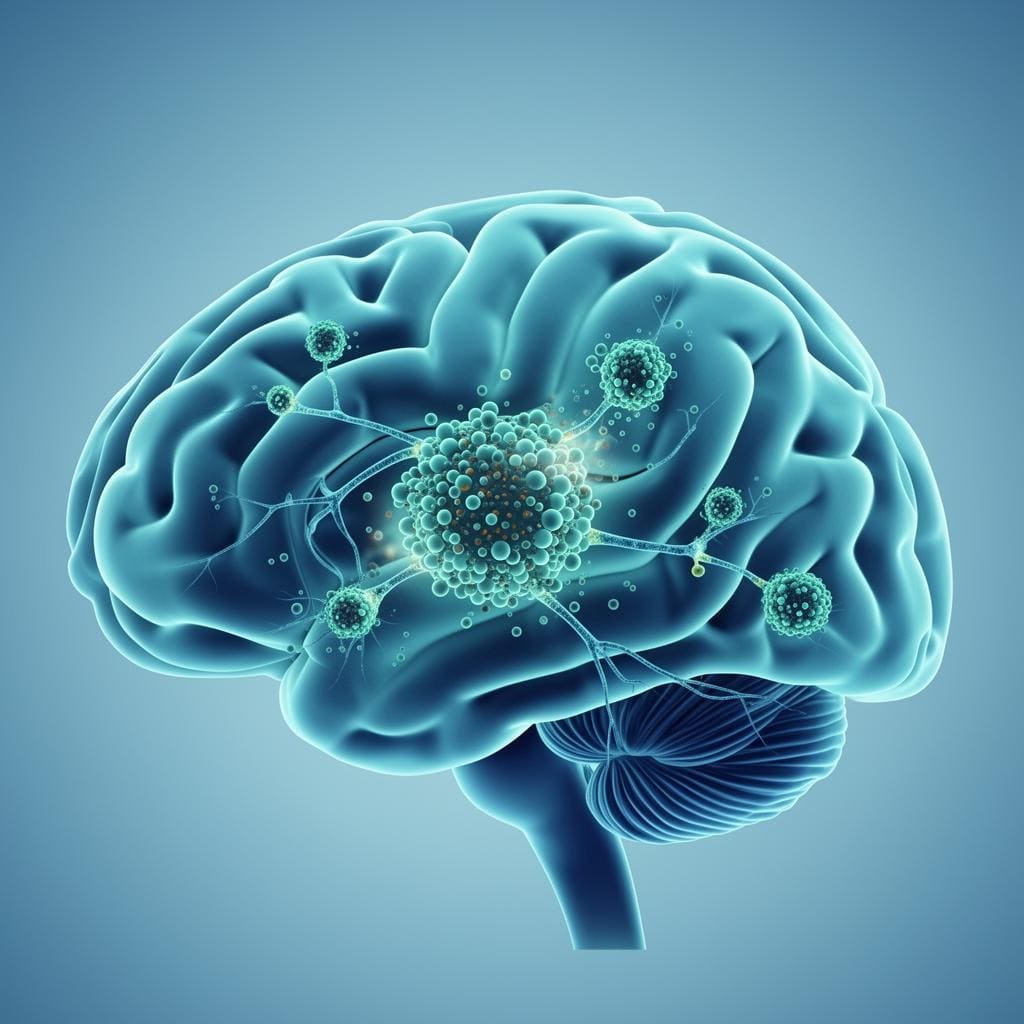
Exosome-neuron interaction in neurodegenerative disease
Exosome therapy represents one of the most promising frontiers in Alzheimer's regenerative medicine. Exosomes are 30–150 nm extracellular vesicles secreted by mesenchymal stem cells, carrying a cargo of bioactive proteins, lipids, mRNA, and microRNAs capable of crossing the blood-brain barrier and modulating cellular behavior in neurodegenerative disease contexts.
Why exosome therapy is particularly relevant to Alzheimer's
- Exosomes efficiently cross the blood-brain barrier, reaching hippocampal and cortical regions affected by Alzheimer's disease
- They carry neuroprotective microRNAs (miR-21, miR-133b, miR-146a) that modulate neuroinflammation, amyloid processing, and neuronal apoptosis
- MSC-derived exosomes may enhance microglial-mediated clearance of amyloid-beta plaques
- Cell-free delivery minimizes immunogenicity risks while preserving the therapeutic paracrine effects of parent stem cells
- Exosomes may support synaptic repair and dendritic spine density — key structures for memory and cognitive function
- Can be administered alongside IV stem cell infusions for synergistic neuroprotective and immunomodulatory effects
Our clinical team evaluates whether exosome therapy for Alzheimer's is appropriate as part of your individualized protocol in Istanbul, based on disease stage, cognitive assessment, and treatment goals.
Neuroinflammation and Brain Support in Alzheimer's Disease
Chronic neuroinflammation is now recognized as a central driver of Alzheimer's disease progression — not merely a secondary response. Overactivated microglia, reactive astrocytes, and elevated pro-inflammatory cytokines create a toxic environment that accelerates neuronal death and synaptic loss far beyond what amyloid plaques alone would cause.
This understanding has shifted regenerative medicine research toward immunomodulatory strategies. Mesenchymal stem cells are uniquely positioned to address neuroinflammation because they:
- Shift microglial polarization from neurotoxic M1 to neuroprotective M2 phenotype
- Suppress excessive TNF-α, IL-1β, and IL-6 production while promoting anti-inflammatory IL-10 and TGF-β
- Reduce oxidative stress through secretion of superoxide dismutase and other antioxidant factors
- Support blood-brain barrier repair, reducing infiltration of peripheral immune cells that amplify brain inflammation
- Modulate complement system activation implicated in synaptic pruning and neuronal damage
By targeting the inflammatory milieu rather than a single molecular pathway, stem cell treatment for Alzheimer's disease may offer a broader approach to brain support than conventional single-target pharmacology. This multi-mechanism strategy is a key reason patients seek neurodegenerative disease treatment in Turkey.
Considering Alzheimer's Stem Cell Therapy in Istanbul?
Our medical team reviews your loved one's Alzheimer's diagnosis, cognitive assessments, brain imaging, and treatment history — free of charge. Receive an honest evaluation and personalized protocol recommendation.
Why Families Choose Istanbul, Turkey for Alzheimer's Treatment

Istanbul has become one of the world's premier destinations for Alzheimer's stem cell therapy and dementia regenerative medicine. Families from the United States, United Kingdom, Canada, Germany, the Netherlands, UAE, Saudi Arabia, and over 40 additional countries choose our Alzheimer's clinic in Istanbul for compelling reasons:
Internationally Accredited Facilities
JCI and ISO-accredited medical centers with dedicated neurology departments, GMP-compliant cell processing labs, and advanced neuroimaging infrastructure.
Experienced Neurology & Regenerative Teams
Specialist physicians trained in clinical neurology, stem cell biology, and international patient care — experienced with Alzheimer's, Parkinson's, ALS, and other neurodegenerative conditions.
Family & Caregiver-Centered Support
Complete caregiver accommodation, patient-companion airport transfers, multilingual coordination, and compassionate family guidance throughout the treatment journey.
Significant Cost Advantage
World-class Alzheimer's stem cell treatment at 40–70% lower cost than US, UK, or Western European alternatives — with no compromise on cell quality, clinical oversight, or safety.
Istanbul's central geographic position — bridging Europe, the Middle East, and Asia — makes it easily accessible for families worldwide. Learn more about the international patient journey or explore our clinic, team, and philosophy.
Your Alzheimer's Treatment Journey in Istanbul
Every Alzheimer's patient journey at TurkeyStemcell is designed around safety, caregiver support, and compassionate medical coordination:
Comprehensive Medical Record Review
Submit your loved one's Alzheimer's diagnosis, cognitive assessment scores (MMSE, MoCA), brain MRI or PET imaging, current medication list, and caregiver observations. Our team evaluates candidacy honestly — not every patient is accepted.
Personalized Consultation & Protocol Design
Receive a detailed treatment recommendation including MSC type and dose, administration routes (IV, intrathecal, intranasal, or combined), whether exosome therapy is appropriate, expected Istanbul stay duration, full cost transparency, and caregiver logistics.
Arrival & Medical Onboarding in Istanbul
We arrange accessible airport transfers, hotel accommodation for patient and caregiver, and complete scheduling. Upon arrival, the patient undergoes baseline neurological assessment, cognitive testing (MMSE/MoCA), blood work, and vitals.
Alzheimer's Stem Cell Treatment Protocol
The individualized protocol may include multiple IV mesenchymal stem cell infusions, intrathecal MSC delivery into the cerebrospinal fluid, intranasal administration for direct hippocampal access, and/or exosome therapy — all under continuous specialist supervision in our accredited facility.
Post-Treatment Monitoring & Long-Term Follow-Up
Monitored recovery during the remaining Istanbul stay. Before departure, the family receives a complete treatment summary and structured follow-up plan. Remote cognitive assessments and caregiver consultations continue at 1, 3, 6, and 12 months.
Who May Be Eligible for Alzheimer's Stem Cell Therapy
Not every Alzheimer's patient is appropriate for regenerative medicine. Our clinical team conducts thorough review before recommending any protocol:
Typical Candidate Profile
- Confirmed Alzheimer's diagnosis by a qualified neurologist
- Early-to-moderate disease stage (generally MMSE ≥10)
- Documented cognitive assessment (MMSE, MoCA, or equivalent)
- Medical stability for international travel with caregiver
- Realistic expectations about supportive, non-curative goals
- Willingness to continue standard neurology follow-up at home
Records We Review
- Neurologist diagnosis letter and clinical notes
- MMSE, MoCA, or CDR cognitive assessment scores
- Brain MRI and/or PET-CT imaging
- Complete medication and supplement list
- Caregiver observations on daily functioning
- Any prior regenerative or experimental treatment records
We prioritize quality over volume and decline applications where treatment would not serve the patient's best interest. Request your free Alzheimer's evaluation to begin the confidential review process, or contact our team with questions.
Frequently Asked Questions About Alzheimer's Stem Cell Therapy in Turkey
Answers to common questions from international families exploring Alzheimer's regenerative medicine in Istanbul.