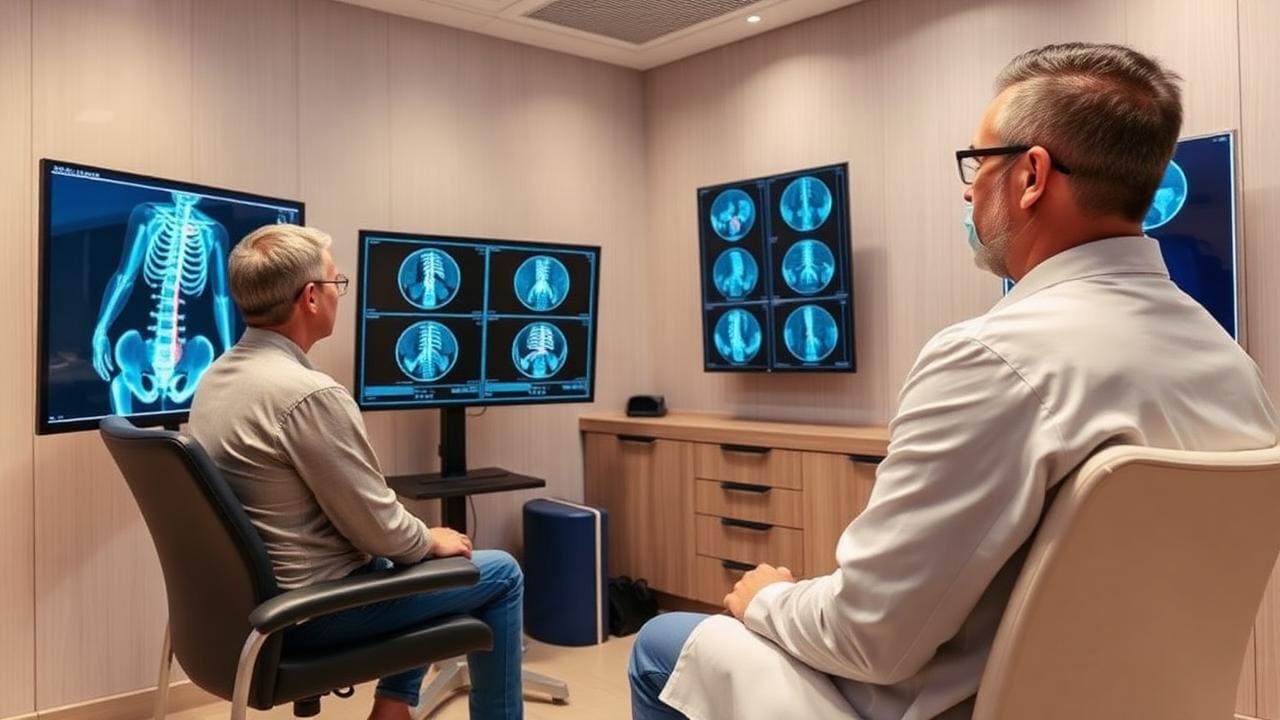
What Causes Chronic Back Pain?
Chronic back pain is one of the most common reasons patients search for regenerative medicine. In many cases, the deeper issue is not just pain itself, but a combination of disc degeneration, joint wear, nerve irritation, chronic inflammation, and loss of normal spinal resilience over time.
Some patients have primarily degenerative disc disease, while others have lumbar disc herniation, facet arthropathy, chronic radiculopathy, sacroiliac-related pain, or persistent symptoms after surgery. Because the causes vary, no serious treatment discussion should happen without imaging and clinical context.
Patients often begin researching stem cell therapy for back pain after years of pain medication, physiotherapy, injections, or recurring flare-ups that never fully restore normal daily function.
Common Spine Conditions We Evaluate
The term back pain is broad. The more precisely the pain source is identified, the more useful the regenerative discussion becomes.
Degenerative Disc Disease
Loss of disc hydration, reduced disc height, annular changes, and chronic disc-related pain patterns that can worsen with sitting, bending, and daily load.
Disc Herniation and Radiculopathy
Bulging or herniated discs may irritate nerve roots and contribute to back pain, leg pain, numbness, tingling, or chronic radiating discomfort.
Facet and Mechanical Spine Pain
Facet joint degeneration, paraspinal overload, and long-term spinal wear can contribute to stiffness, extension pain, instability, and daily movement limitations.
Why Patients Seek More Options
Many patients explore regenerative medicine after years of pain medication, physiotherapy, steroid injections, or even surgery without lasting improvement.
Why Patients Explore Regenerative Medicine for Back Pain
Standard back pain treatment often focuses on symptom control: medication, steroid injections, physical therapy, rest, strengthening, and in some cases surgery. These can be important and effective, but they do not always solve the underlying degenerative environment inside a damaged disc or chronically irritated spinal segment.
This is why some patients begin exploring mesenchymal stem cell therapy and exosome therapy as complementary strategies. The interest is not just whether pain can be masked. It is whether the inflammatory environment, disc-related biology, and local tissue-support signaling can be improved in a more regenerative direction.
For selected patients with discogenic or degenerative pain, that question becomes especially relevant.
How Mesenchymal Stem Cells May Support Spinal Disc Repair
Mesenchymal stem cells (MSCs) are central to the regenerative medicine conversation around chronic back pain because they are studied for their anti-inflammatory, immunomodulatory, and tissue-support signaling properties.
Disc Microenvironment Support
Degenerating discs often exist in a hostile inflammatory and mechanically stressed environment. MSCs are being explored because of their relevance to local signaling pathways associated with disc health and structural support biology.
Inflammation Modulation
Chronic spinal pain is often reinforced by inflammation around discs, joints, ligaments, and nerve-adjacent tissues. MSCs are of interest because of their ability to support a less reactive local inflammatory environment.
Tissue-Support Signaling
In spine degeneration, the goal is often not a dramatic overnight anatomical reversal, but support for a better biological environment around the injured segment. This is where regenerative medicine is most commonly discussed.
Image-Guided Precision
Because the spine is structurally complex, precision matters. Intradiscal and targeted injections are typically discussed in the context of image-guided delivery and careful case selection.
- Mesenchymal stem cells are studied for their anti-inflammatory and tissue-support signaling properties rather than as a guaranteed structural cure.
- They are of interest in degenerative disc disease because of their relevance to disc microenvironment biology and inflammatory modulation.
- They may help support extracellular matrix signaling and the biological environment around damaged discs and facet-related pain areas.
- They are often discussed in the context of discogenic pain, chronic inflammatory pain, and local tissue degeneration.
- Exosomes are also of interest because they carry signaling molecules involved in inflammation regulation and regenerative communication pathways.
- Supportive regenerative spine protocols are usually considered alongside physiotherapy, movement rehabilitation, and physician-guided pain management.
Exosome Therapy for Back Pain
Exosomes are signaling vesicles released by cells, including mesenchymal stem cells, and they carry bioactive molecules related to inflammation regulation and tissue communication. In spine care, exosome therapy is often discussed as part of a broader regenerative strategy for disc degeneration, soft-tissue irritation, and chronic pain patterns.
Exosome-based support remains part of an evolving regenerative medicine landscape and should be approached with realistic expectations rather than hype.
Considering Stem Cell Therapy for Back Pain?
Send your MRI scans, treatment history, and pain summary for a confidential no-obligation review. We can help determine whether your case appears appropriate for further regenerative medicine discussion.
Who May Be Eligible for Back Pain Stem Cell Therapy in Turkey
Not every back pain patient is automatically a candidate. Suitability depends on the diagnosis, MRI findings, number of levels involved, surgery history, pain source, nerve compression severity, and overall medical context.
- Patients with MRI-confirmed degenerative disc disease or structural spine degeneration
- Patients with chronic back pain that has not responded well to conservative treatment
- Patients with disc herniation, radiculopathy, or chronic discogenic pain seeking regenerative review
- Patients with medically stable status for travel and treatment planning
- International patients looking for a structured back pain case review in Istanbul before deciding on treatment
A careful review is especially important when pain may be heavily neuropathic, when instability is severe, or when the major issue may require a surgical rather than regenerative discussion.
Why International Patients Choose Istanbul for Back Pain Treatment
Patients comparing back pain treatment in Turkeyare usually looking for a combination of serious MRI review, practical travel logistics, treatment accessibility, and cost efficiency.
International Medical Travel Hub
Istanbul combines strong international access with private healthcare infrastructure and short-stay treatment logistics for international spine patients.
Focused MRI-Based Review
Patients can often begin with remote review of MRI findings and prior treatment history before deciding whether travel makes sense.
Cost Efficiency
Many international patients compare Turkey because regenerative spine treatment planning is often more cost-efficient than certain private-sector options abroad.
Practical Short-Stay Planning
For many back pain patients, evaluation, image-guided treatment, and initial follow-up can be organized efficiently within a manageable Istanbul visit.
Your Back Pain Treatment Journey in Istanbul
- Record Review: Send MRI results, symptom history, treatment background, and any prior injection or surgery information for screening.
- Case Assessment: We review whether the pain pattern and imaging findings appear suitable for supportive regenerative medicine discussion.
- Treatment Planning: If appropriate, a proposed regenerative plan is outlined based on diagnosis, spinal level involvement, and treatment goals.
- Travel to Istanbul: Patients coordinate a short stay for evaluation, image-guided treatment, and immediate follow-up discussion.
- Post-Treatment Guidance: Patients receive recovery guidance, rehabilitation recommendations, and are encouraged to continue structured follow-up.
What Documents You Should Send for Evaluation
The quality of the review depends heavily on the quality of the records. The more complete the documentation, the more precise the discussion can be.
- MRI scans or MRI report
- X-rays or CT reports if relevant
- Pain history and symptom timeline
- Medication and injection history
- Previous physiotherapy or rehabilitation history
- Surgery history if applicable
- Short summary of current functional limitations
Benefits Patients Commonly Hope For
Patients researching stem cell therapy for back pain commonly hope for a combination of structural-support and quality-of-life improvements:
- Reduced chronic back pain intensity
- Less radiating discomfort into the legs
- Improved sitting, standing, and walking tolerance
- Reduced stiffness and flare frequency
- Better mobility and daily function
- Improved quality of life in selected cases
Important: results vary significantly. No improvement can be guaranteed, and chronic spinal pain remains a complex condition requiring physician-guided care.
Safety, Limitations, and Realistic Expectations
Patients should approach regenerative medicine for back pain with both hope and realism. Stem cell therapy is not a universal answer, not every patient is a candidate, and outcomes can vary widely based on diagnosis, disc degeneration severity, nerve involvement, mechanical instability, prior surgery history, and overall health status.
It is especially important to understand that regenerative treatment should not replace proper spinal assessment. Severe nerve compression, progressive weakness, bowel or bladder symptoms, or unstable structural findings require urgent specialist evaluation through appropriate medical channels.
Explore Whether Your Back Pain Case Is a Fit
Our team can review your MRI, chronic pain history, and prior treatments to tell you whether your case appears suitable for further regenerative medicine discussion.
Frequently Asked Questions About Back Pain Stem Cell Therapy
Medical Disclaimer
Stem cell therapy and exosome therapy for back pain, degenerative disc disease, disc herniation, and chronic spinal pain are generally considered investigational or evolving regenerative approaches. This page is for educational purposes and does not replace individualized medical advice, diagnosis, or treatment from a licensed physician. Patients should not stop or alter standard treatment without medical supervision.