
Autologous NK Cell Therapy in Turkey
A personalized Natural Killer cell program in Istanbul using NK cells derived from the patient's own peripheral blood — considered only after detailed medical evaluation, immune profiling, and physician eligibility review.
What Is Autologous NK Cell Therapy?
Autologous Natural Killer (NK) cell therapy is an immune-focused cellular therapy in which NK cells are isolated from the patient's own peripheral blood, expanded and prepared under controlled laboratory conditions, and then reintroduced under medical supervision as part of a personalized cellular immunotherapy program in Istanbul, Turkey.
NK cells are lymphocytes of the innate immune system. They express CD56 and CD16, lack the T-cell receptor, and recognize abnormal or stressed cells through a 'missing-self' mechanism based on reduced Major Histocompatibility Complex class I (MHC I) on the target cell surface. They act through release of perforin and granzymes and through death-receptor signaling such as FAS and TRAIL.
Because the NK cells originate from the patient, autologous NK programs may be preferred when minimizing donor-related considerations is a priority — and when the patient's own immune cell quality and quantity are adequate after physician assessment. Turkey Stem Cell coordinates autologous NK cell therapy in Istanbul with hospital infrastructure, multidisciplinary oversight, defined laboratory protocols, and structured international patient support. Each plan is built around the patient's diagnosis, prior treatments, and clinical context, with transparent discussion of benefits, limitations, and risks — and no guaranteed outcomes.
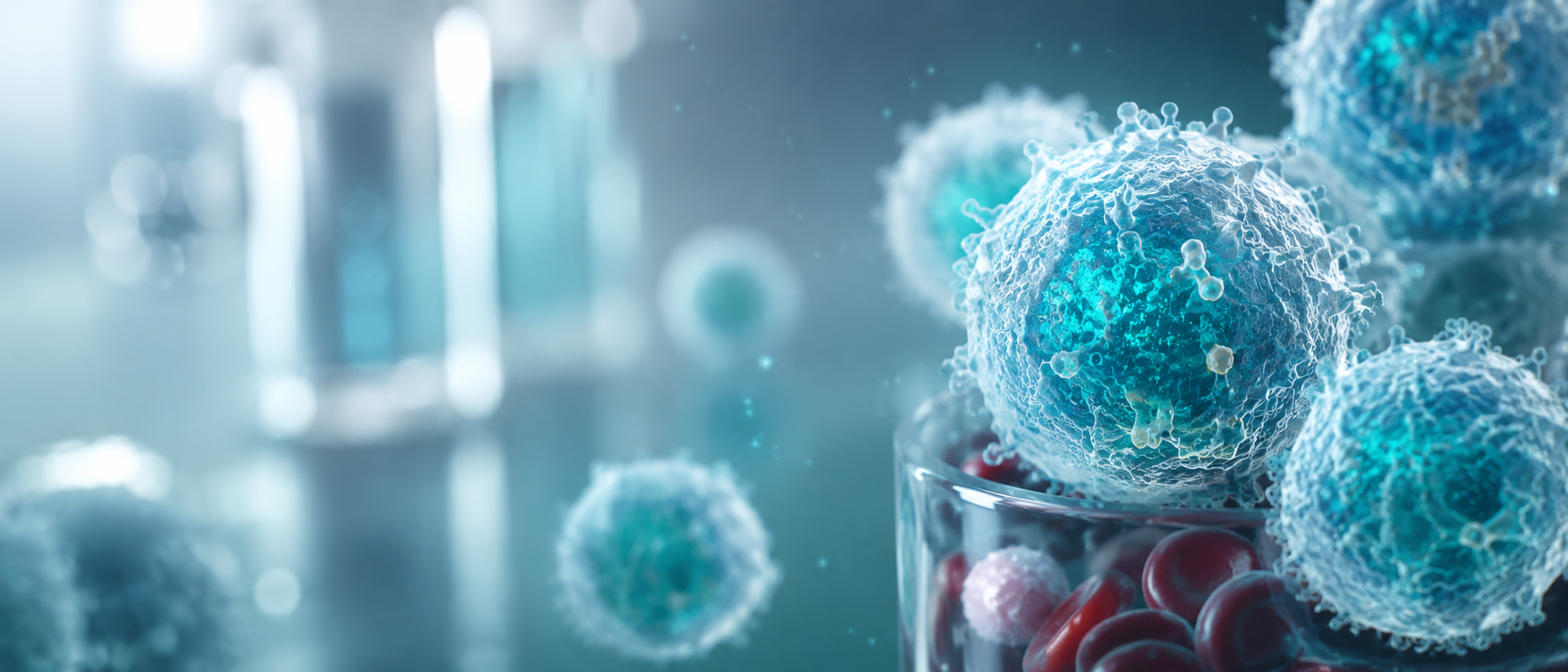
Autologous NK Cell Therapy — Process, Dosing, and Clinical Coordination
An autologous NK program begins with peripheral blood collection from the patient, followed by laboratory isolation and expansion of the NK cell population over a defined period. Cultured cells are evaluated for purity (NK cell population), absence of unwanted lymphocyte contamination, maturity (CD16+), and cytotoxic activation markers, so the prepared cell product meets defined quality criteria before infusion.
Dosing is individualized to the patient's weight, indication, and severity. Cellular therapy literature commonly references doses in the order of one to several million NK cells per kilogram of body weight, with multiple applications across a defined schedule. Administration is most often intravenous; in selected cases the route may be intra-tumoral for accessible solid lesions or intrathecal (into the cerebrospinal fluid) for central-nervous-system indications, only when medically appropriate and under physician oversight.
Scheduling around standard care matters. Autologous NK cell infusions are coordinated so they do not coincide with cytotoxic chemotherapy or radiotherapy on the same day; spacing of at least 24 hours — and commonly around a week before or after chemotherapy or radiotherapy — is typically observed to protect NK cell viability and patient tolerance. Exact timing is decided by the treating physician based on the patient's regimen and recovery.
Key Aspects of This Therapy
Autologous NK Cells from the Patient's Own Blood
NK cells are collected from the patient's peripheral blood and prepared under controlled laboratory conditions in Istanbul.
Lower Donor Compatibility Concerns
Because cells originate from the patient, donor compatibility considerations are minimized compared with allogeneic NK approaches.
Controlled Expansion & Quality Checks
Cells are evaluated for purity, maturity (CD16+), and cytotoxic activation markers before any clinical use.
Depends on Immune Cell Quality
Suitability requires sufficient quality and quantity of the patient's own NK cells, assessed before any plan is proposed.
Physician-Led Eligibility Review in Istanbul
Every case is reviewed individually before an autologous NK cell program in Turkey is considered.
Personalized Cellular Therapy Plan
Eligible patients receive a written plan covering proposed approach, schedule, and clinical considerations.
Who May Request an Evaluation
This therapy is not appropriate for everyone. The following are examples of clinical contexts where a medical evaluation may be considered:
- Patients exploring immune-supportive cellular therapy and autologous NK cell programs in Turkey
- Patients with adequate autologous NK cell quality on initial assessment
- Oncology-related consultations where autologous NK cell immunotherapy may be discussed alongside standard care
- Patients with selected viral conditions where NK-based approaches may be reviewed (case-by-case)
- International patients requesting coordinated NK cell therapy evaluation in Istanbul
Requesting an evaluation does not guarantee treatment eligibility. Final decisions are made by the treating physician based on the complete medical assessment.

Safety & Eligibility
Autologous NK cell therapy in Turkey requires careful medical screening. Depending on the case, patients may need complete blood counts, immune profiling, imaging, infectious-disease screening, prior treatment records, medication review, and physician clearance before any cellular therapy program is considered.
Reported adverse effects of NK cell infusions in cellular therapy literature are generally mild to moderate and may include low-grade fever, headache, dizziness, chills, lightheadedness, or nausea — most often resolving within about 24 hours and manageable with standard supportive care. Active uncontrolled infections, certain hematologic conditions, advanced organ dysfunction, and some ongoing medications may affect eligibility. Autologous NK cell therapy is not a guaranteed cure and outcomes cannot be promised in advance.
No clinical outcome can be guaranteed. All information shared during evaluation is for educational and clinical-planning purposes only and does not replace direct medical advice from your primary care team.
Frequently Asked Questions
Explore Related Resources

Request a Personalized Evaluation
Send your diagnosis, recent medical reports, blood tests, imaging, and treatment history. Our medical team will review your case and advise whether this advanced cellular therapy program may be suitable.