Research, Evidence & Uncertainty

Understanding Stem Cells and the Evidence

Stem cells growing in a laboratory culture flask, from a film explaining the treatment.

Explore how mesenchymal stromal cells and extracellular vesicles are studied, what clinical trials can tell us, and which questions remain open. A biological mechanism is a reason to investigate a treatment; it is not, by itself, proof that the treatment helps patients.

A visual explanation

From joint to cell.

Explore the anatomy, the signals and the questions researchers ask. These conceptual scenes explain research ideas, not an expected treatment result.

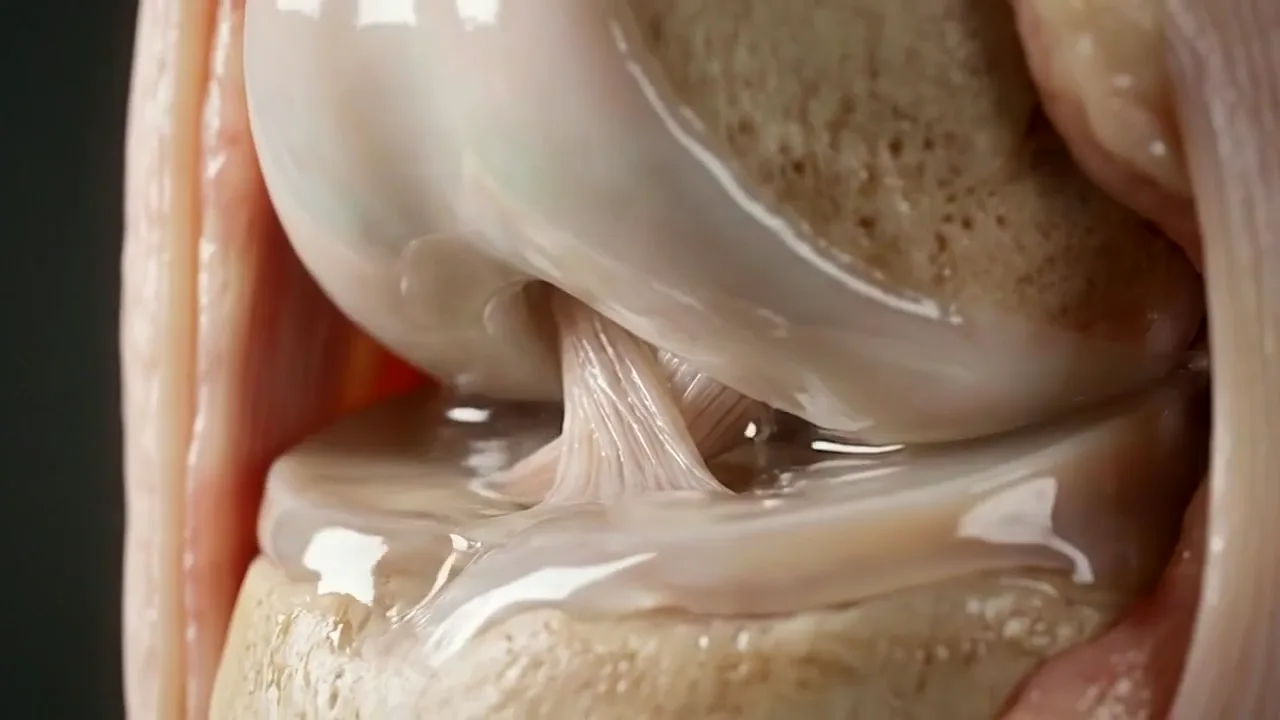
Illustrative animation of injected fluid spreading across worn knee cartilage.
01 / 03
Illustrative animation of injected fluid spreading across worn knee cartilage.

01 The joint

Begin with the whole joint.

Cartilage, bone, the joint lining and surrounding tissues form a connected system. Researchers study the local environment as well as individual cells.

The editorial knee view introduces the joint at a human scale.

  • Joint structures
  • Tissue neighborhood
  • Different cell types
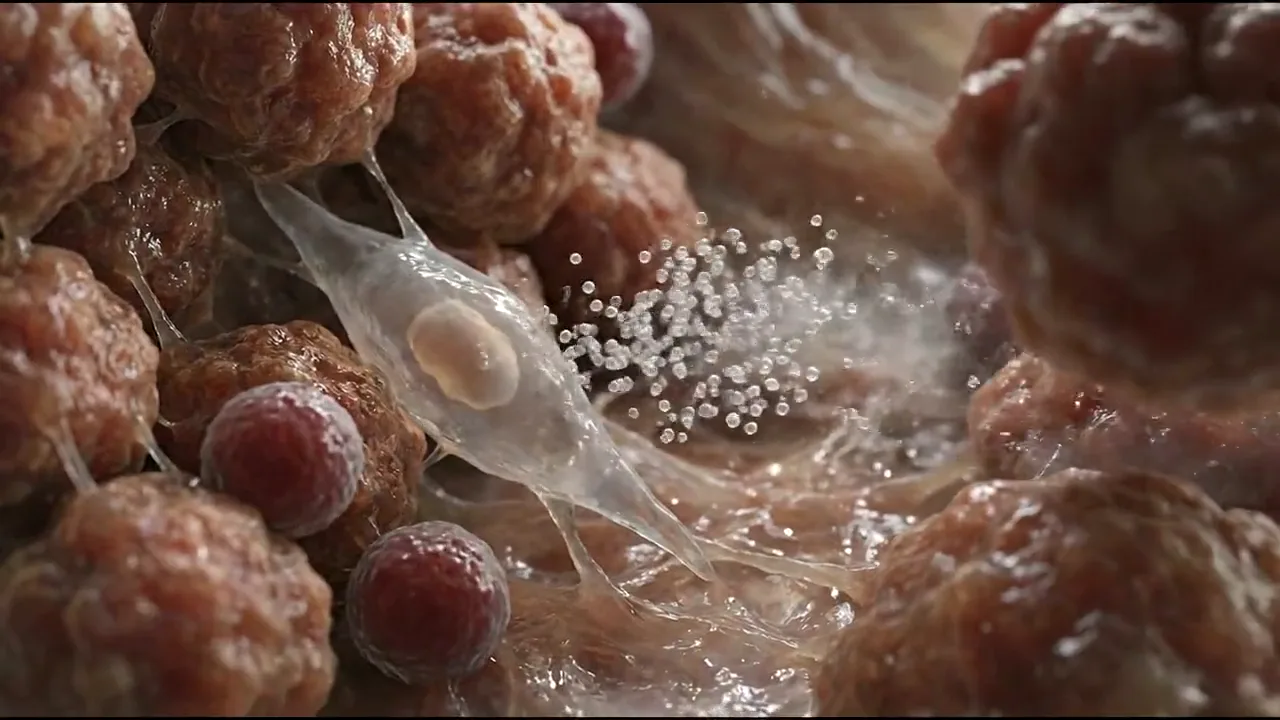
A stem cell releasing a cloud of tiny vesicles towards neighbouring cells.

02 The signals

A cell can influence its neighbors.

Mesenchymal stromal cells release soluble factors and extracellular vesicles. Scientists investigate how these signals interact with other cells: a process called paracrine signaling.

The illustration separates two cell surfaces, small vesicles and molecular motifs.

  • Source cell
  • Soluble factors and vesicles
  • Recipient cell
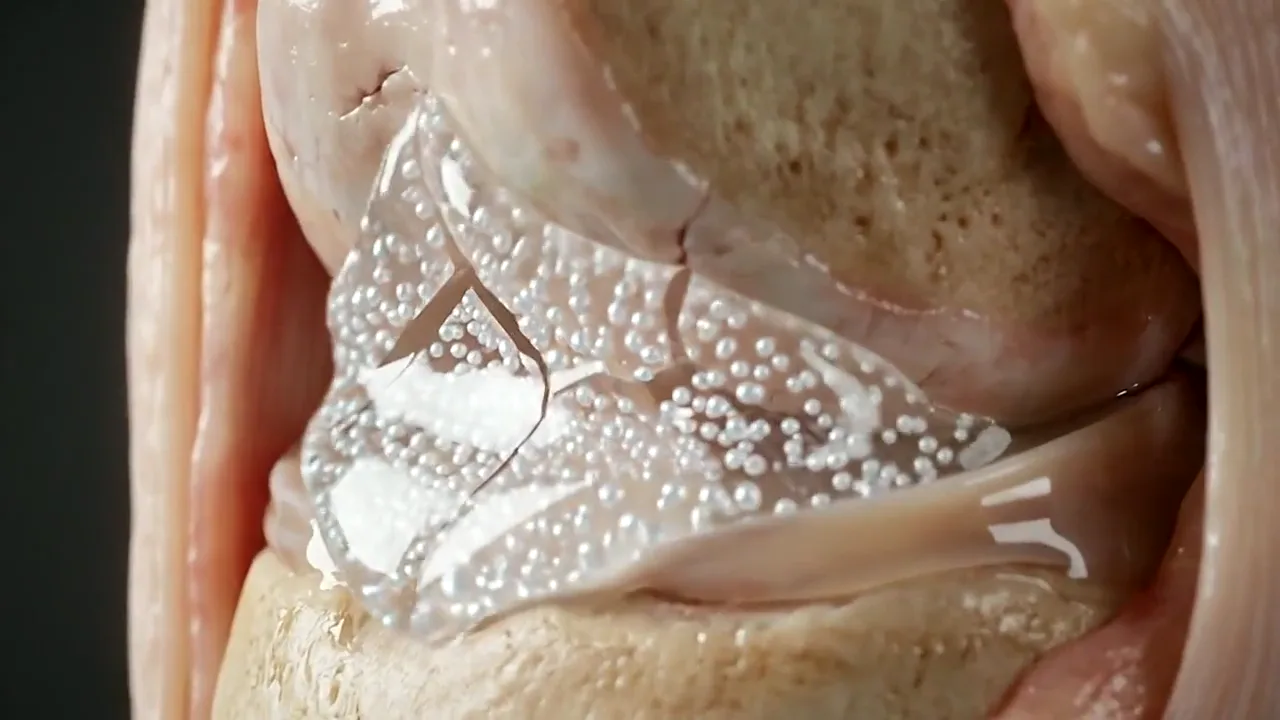
Injected gel spreading over worn joint cartilage as the surface smooths.

03 The response

Context changes the response.

Resident cells, immune cells and the tissue around them interact in complex ways. A proposed mechanism must be tested for the particular product and condition being studied.

A biological explanation cannot establish pain relief, cartilage regrowth or treatment benefit. Human studies must separately assess meaningful outcomes, risks and follow-up.

  • Resident tissue cells
  • Immune cells
  • Local environment

How mechanisms are evaluated before clinical use

What Are Stem Cells?

The body contains specialized cells with different jobs. Stem cells can make more cells of their own type and, within limits that depend on the cell type, produce specialized descendants. Some maintain tissues throughout life. Using a cell product as a treatment requires separate evidence of its safety and benefit for a particular condition.

The term mesenchymal stromal cells (MSCs) describes cultured cell populations obtained from sources such as bone marrow, fat and umbilical cord tissue. They are often called mesenchymal stem cells, but that name does not establish that every cell can rebuild damaged organs or become functioning nerve cells in a patient.

Self-renewal and differentiation are biological properties, not treatment guarantees. Common laboratory criteria for MSCs include surface markers and the ability to form bone, fat and cartilage cell types under specific culture conditions. These tests identify a cell population; they do not prove clinical potency or nerve regeneration. See the ISCT minimum characterization criteria.

Types of Stem Cells Used in Medicine

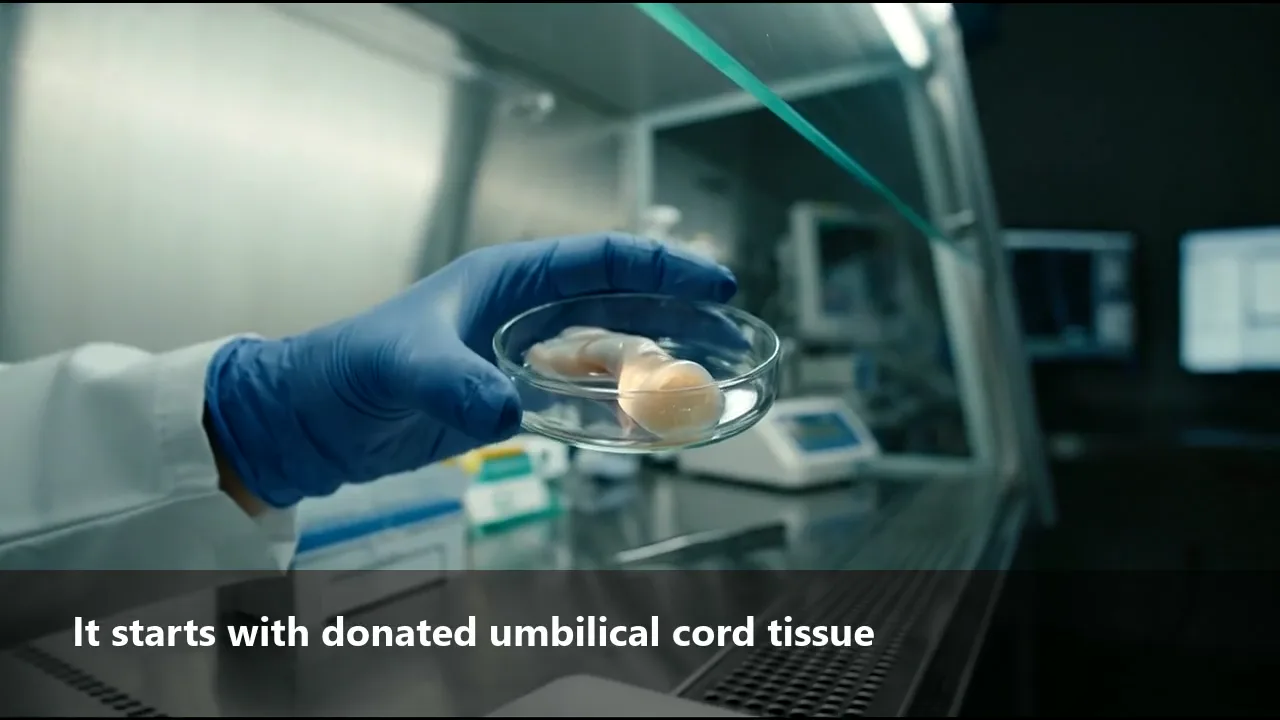
Embryonic stem cells and induced pluripotent stem cells (iPSCs) differ from tissue-derived MSCs in their developmental potential and risks. Wharton's jelly MSCs (WJ-MSCs) come from the connective tissue of the umbilical cord after birth. Cord tissue cells are distinct from cord blood products. When considering a proposed WJ-MSC product, establish:

  • The exact tissue source and whether cells are donor-derived or the patient's own
  • The donor-consent and infection-screening process, with traceability to the product
  • How culture, expansion, storage and transport affect the final cell preparation
  • Which identity, viability and functional potency tests are used for batch release
  • Whether published trials used the same product, route, dose and patient population

Learn more about our mesenchymal stem cell therapy overview and the questions to discuss when assessing neurological, orthopedic, autoimmune and restorative medicine proposals.

Wharton's Jelly-Derived Mesenchymal Stromal Cells (WJ-MSCs)

WJ-MSCs are one source of mesenchymal stromal cells being investigated in regenerative medicine. Their characteristics depend on the donor, tissue isolation, culture conditions and manufacturing process. A cord-tissue source alone does not establish greater safety, stronger potency or better patient outcomes than other MSC sources.

Growth in Culture

WJ-MSCs can expand in laboratory culture. Growth rate and differentiation assays describe manufacturing characteristics, not comparative clinical benefit.

Immune Signaling

Studies examine how MSCs interact with immune cells and inflammatory signals. Effects depend on the preparation and experimental environment; they are not a universal anti-inflammatory treatment effect.

Growth Factor Secretion

MSCs release soluble factors and extracellular vesicles. Their roles in cell survival and tissue responses are studied, but secretion alone does not demonstrate regrowth of cartilage, discs or other tissues in patients.

Characteristics, Potential Advantages and Limitations

Cord tissue can provide a donor cell source without harvesting bone marrow or fat from the recipient. Other proposed advantages need testing for the specific product:

  • Cell identity: surface markers help characterize MSCs; marker expression does not demonstrate pluripotency, superior efficacy or absence of risk.
  • Immune interactions: immune-modulating activity observed in a laboratory may differ after administration, depending on disease and inflammatory conditions.
  • Allogeneic immune risk: donor-derived MSCs are not guaranteed to be invisible to the immune system. Low expression of some immune markers does not rule out immune recognition or adverse reactions.
  • No recipient harvesting: using donated cord tissue avoids a cell-harvesting procedure for the recipient, but infusion or injection still carries risks.
  • Expansion and dosing: cell number, culture passage, viability and functional activity are separate properties. More cells or more expansion does not automatically mean a better treatment.

Three Mechanisms Under Investigation

01

Immune and Vascular Signaling

In cell and animal experiments, secreted signals can alter immune-cell behavior and blood-vessel formation. Which pathways matter clinically depends on the product, disease and route.

02

Cell-to-Cell Interactions

Researchers study soluble signals, cell contact and mitochondrial transfer in experimental systems. These findings do not establish restoration of damaged organs or nerves after an MSC infusion.

03

Extracellular Vesicle Signaling

MSC-derived vesicles may influence recipient cells through proteins, lipids and RNA. Their composition and biological activity require characterization; clinical delivery and benefit remain product-specific questions.

Mechanistic examples include laboratory assays of MSC immune and vascular activity and mitochondrial-transfer experiments in mice with lung injury. Neither study establishes clinical benefit across the conditions listed below.

These proposed mechanisms are discussed in our neurological, orthopedic, autoimmune, and autism support resources. Evidence from one condition or product cannot establish benefit in another.

Allogeneic Therapies: Donor Cells and Product Quality

Allogeneic means that cells come from a donor; autologous means they come from the patient. Donor products require documented consent, traceability, donor eligibility and infectious-disease testing. Screening reduces risk but cannot guarantee that a product is infection-free. Ask who manufactures the product and how each batch is released.

Manufacturing controls are essential, but a description such as GMP-aligned is not proof of a particular facility's authorization or a treatment's effectiveness. Ask for the named manufacturer, applicable authorization, certificate scope and current batch documentation. Laboratory quality, regulatory permission and demonstrated clinical benefit are separate questions.

Quality Control & Manufacturing Process

Screening

Ask how donor eligibility, consent, infectious-disease screening and traceability are documented. Screening cannot eliminate every infectious or immune risk.

Purification

Ask how the cell population is isolated and expanded, which materials are used and how passage limits are set. A cell count does not measure therapeutic potency.

Ongoing Testing

Request the product-specific release criteria for identity, viability, sterility, endotoxin, mycoplasma and functional activity. The acceptance limits and validated methods should be explained.

Cryo-Preservation

Ask how freezing, transport, thawing and time to administration are controlled, and whether the stated viability and dose describe the product after thawing.

Quality testing can include identity by flow cytometry, contamination testing, viability, genetic stability and assays of a relevant biological function. The test panel and limits must be justified for the particular product. Neither a fixed test count nor a viability percentage can ensure a safe, effective result for every patient.

Hypoxia-Conditioned Mesenchymal Stem Cells

Preconditioning means changing cells' culture environment before use, for example by altering oxygen levels or exposing them to selected signals. Researchers investigate whether this changes cell survival, metabolism or secreted factors. A modified manufacturing process also needs its own characterization and safety assessment.

Hypoxic culture uses lower oxygen levels than conventional laboratory culture. Results vary with oxygen concentration, exposure time, cell source and assay. Experimental studies investigate:

  • Changes in immune-related signaling and cell migration
  • Effects on endothelial cells and blood-vessel formation in experimental models
  • Cell survival, metabolism and growth under defined culture conditions
  • Whether any observed changes persist after storage, thawing and administration

For example, a laboratory study of cord-blood MSCs examined survival and pro-angiogenic activity after hypoxic conditioning. It was an in-vitro study, not a trial proving cartilage, bone or tendon regeneration in people, and cord-blood MSCs are not the same preparation as WJ-MSCs.

If a hypoxic or normoxic cell product is proposed, ask for the exact manufacturing process and comparative human evidence for your diagnosis. The references on this page do not establish that hypoxia-conditioned WJ-MSCs halt disease progression or outperform a normoxic product.

What Are MSC Exosomes?

Exosomes are membrane-enclosed extracellular vesicles, not individual molecules. The term refers to vesicles formed through a particular intracellular pathway. Where that origin has not been demonstrated, the broader term extracellular vesicles (EVs) is more accurate. Size alone does not establish that a preparation contains exosomes.

MSC-derived EVs can contain proteins, lipids and RNA. Their composition varies with the cell source, culture conditions, isolation and measurement methods; there is no universal number of proteins or microRNAs that defines an MSC-EV product. Small size alone also does not guarantee passage across the blood-brain barrier or delivery to a therapeutic target.

Investigators examine several types of vesicle-associated cargo and activity:

  • Proteins and lipids involved in vesicle structure and interactions with recipient cells
  • RNA, including microRNAs, which may affect signaling or gene regulation in experimental systems
  • Biological activity measured with appropriate controls to distinguish vesicle effects from co-isolated soluble material

Laboratory findings are a rationale for clinical research, not evidence that adding EVs to MSC treatment produces faster relief or better repair. A combination requires its own controlled studies, dose definition and safety assessment. An anecdotal improvement cannot identify which treatment caused it.

An EV product is not interchangeable with living cells, and its route, timing and risks must be assessed separately. Ask for evidence of identity, purity, potency, sterility and the manufacturer's authorization; do not infer an on-site laboratory or verified potency from a marketing description. The ISEV MISEV2023 guidance explains research characterization standards, not approval of a therapy.

Learn More About Exosome Therapy
Conceptual illustration of anonymous care-planning conversation.

Precision Stem Cell Applications

Delivery route affects where a product goes, how it is studied and which risks need assessment. Imaging can guide a needle; it does not establish that the cells will survive, reach the intended biological target or improve outcomes.

MSCs are investigated across the condition families below, but the maturity and findings of the evidence differ. This list describes research topics, not a list of conditions for which every MSC or exosome product is proven effective:

Arthritis & Orthopedic Injuries
Neurological Diseases & Disorders
Autoimmune & Rheumatologic Conditions
Cardiovascular & Metabolic Disorders
Dermatologic & Anti-Aging Conditions
Urologic & Sexual Wellness

Administration Methods

Intravenous administration introduces cells into the bloodstream; it does not guarantee that they reach diseased tissue. Local administration places a product at a selected anatomical site. Route selection must account for the exact product, clinical evidence, anatomy, alternatives and procedural risks. Ask who performs the procedure, what guidance and anesthesia are used, and how complications are managed.

Intravenous (IV)

Infusion into a vein. Biodistribution and clearance affect exposure; targeted homing is not assured. Infusion reactions and product-related risks require monitoring.

Intra-articular

Injection into a joint, studied in conditions such as knee osteoarthritis. Risks include pain, bleeding and infection; anesthesia needs are individualized.

Intrathecal

Delivery into cerebrospinal fluid, usually by lumbar puncture, rather than into the spinal cord. Headache, infection, bleeding and neurological complications require specific discussion.

Intralesional

Delivery into a defined lesion or soft-tissue site. Accuracy, local tissue injury and product-specific risks matter; local placement alone does not prove benefit.

Intradiscal

Injection into an intervertebral disc; facet-joint injection is a different procedure. Infection and injury to nearby structures are material risks; sedation depends on the procedure.

Intradermal

Delivery into the skin. Cosmetic claims require product-specific evidence; pain, infection, scarring or unwanted tissue responses may occur.

Research and Innovation

Reliable research begins with a defined question, a characterized product and a prespecified study plan. Laboratory experiments explore mechanisms; early trials assess feasibility and safety; controlled trials test whether benefits exceed those of a comparator. Reviews summarize these studies but cannot remove weaknesses in the underlying evidence.

How to Appraise a Study

A useful study report should identify the population, intervention, comparator and outcomes, including adverse events and follow-up losses. When cells are combined with surgery, rehabilitation, platelet-rich plasma or other therapies, separating the contribution of each treatment can be difficult. Assess:

  • Whether allocation was randomized and patients or assessors were blinded
  • The cell source, manufacturing, dose, route and any concurrent treatment
  • The prespecified primary endpoint and the size and uncertainty of the effect
  • Adverse events, duration of follow-up and how missing results were handled
  • Independent replication, study registration, funding and conflicts of interest

Connecting Evidence to a Care Decision

Evidence must match the proposed product and indication. Findings from autologous bone-marrow cells, adipose cells, cord blood, WJ-MSCs and isolated EVs cannot be treated as interchangeable. A favorable safety report from a small trial also cannot exclude uncommon or delayed harm.

Each of these areas needs its own assessment of benefits, uncertainties, risks and established alternatives:

  • Orthopedic and musculoskeletal disorders
  • Degenerative disc and spine disorders
  • Neurological disorders including MS, Parkinson's, and stroke recovery
  • Rheumatologic and autoimmune diseases
  • Dermatological and aesthetic conditions
  • Metabolic and cardiovascular conditions
  • Developmental conditions including autism spectrum support

Questions About a Provider's Evidence

Before relying on clinic-specific research, collaborations or outcome claims, ask for verifiable documentation:

  • Which publications describe the exact proposed cell or EV product?
  • Is the named provider an author or investigator, and can that role be verified?
  • What authorization or ethics approval applies to the exact treatment and facility?
  • How were outcomes, adverse events, follow-up losses and satisfaction measured?
  • Are results independently reviewed, and do they include all eligible patients rather than selected testimonials?

Clinical Evidence & Published Research

Published findings include encouraging signals, negative results and unresolved questions. The examples below illustrate why product, study design and endpoint matter. They are not TurkeyStemcell outcome data, a comprehensive systematic review or a forecast of an individual patient's result.

Regulatory approvals are also specific. For example, the FDA approved the donor bone-marrow MSC product Ryoncil in December 2024 for steroid-refractory acute graft-versus-host disease in children aged two months and older. That U.S. approval does not extend to other MSC preparations, WJ-MSCs or the conditions discussed here, and does not establish authorization in Turkey.

Orthopedic & Musculoskeletal Conditions

Knee osteoarthritis trials have used different cell sources and comparators. Some report improvements in pain or function, while structural findings are inconsistent. Symptom improvement is not the same as demonstrated cartilage regrowth. In the small Matas et al. randomized phase I/II trial, repeated cord-derived MSC dosing improved some clinical scores relative to hyaluronic acid at one year, but MRI scores did not differ.

Other studies in the selected references show the range of evidence and its limitations:

  • Jo et al. (2017) followed 18 recipients of their own adipose-derived MSCs for two years. Improvements and structural signals in this cohort warrant controlled confirmation; they do not establish WJ-MSC efficacy.
  • Hernigou et al. (2014) reported better healing after rotator-cuff surgery augmented with bone-marrow concentrate in a case-controlled study. This is not evidence that a standalone donor-cell injection prevents every re-tear.
  • Gupta et al. (2016) studied pooled donor bone-marrow MSCs. The 25-million-cell group's symptom trend was not statistically significant versus placebo; higher doses had more adverse events, and MRI scores did not differ.
  • Lamo-Espinosa et al. (2020) studied autologous bone-marrow MSCs with a platelet-rich plasma preparation. Within-group improvements were reported, but between-group differences were not statistically significant and imaging did not show structural improvement. A combination trial cannot establish the effect of WJ-MSCs or exosomes alone. Meniscal and tendon indications also require their own controlled evidence.

Neurological Conditions

Early studies investigate MSCs in multiple sclerosis, stroke, spinal cord injury, Parkinson's disease and Alzheimer's disease, using different routes and endpoints. These are not interchangeable neurological indications. In the randomized MESEMS trial, intravenous autologous bone-marrow MSCs did not improve the primary MRI inflammatory-lesion endpoint in active MS at 24 weeks. Neither a mechanism illustration nor an early safety signal establishes nerve replacement or recovery of neurological function.

Autoimmune Diseases

Immune-modulating effects are a reason to study MSCs in rheumatoid arthritis, lupus and inflammatory bowel disease, not proof of an immune-system reset. Disease activity, remission, steroid use and adverse events must be assessed in controlled studies for each indication. A response in one immune disorder does not establish benefit in another, and an investigational proposal should be reviewed alongside established care.

Anti-Aging & Longevity

Studies of frailty, skin outcomes or biomarkers cannot by themselves demonstrate reversal of aging, longer life or systemic rejuvenation. Even within skin research, findings can be negative: Fan et al. (2020) randomized 90 women to cord-derived MSC hydrogel or placebo after cesarean delivery and found no significant difference in the primary scar outcome at six months. This trial does not support broad anti-aging or cognitive-benefit claims.

Autism Spectrum Support

Cell-based interventions for autism remain investigational and should not be presented as a proven way to improve communication or development. In Dawson et al. (2020), a randomized trial of 180 children, intravenous cord blood did not improve the primary social-communication outcome in the overall sample. Cord blood differs from WJ-MSCs and EVs, so this result does not establish those products' effects. Pediatric proposals require careful independent assessment of evidence, risks, consent and established developmental supports.

Evidence and risk: Cell-based interventions can cause harm as well as fail to help. Infection, immune or infusion reactions, unwanted tissue formation and route-specific complications need discussion; some unproven products have caused serious adverse events, and long-term risks may be uncertain. The ISSCR clinical translation guidance calls for rigorous evidence and oversight of unproven interventions. The FDA patient information describes risks of unapproved regenerative products in the United States; it does not establish a provider's status in Turkey. Read our full medical disclaimer.

Selected References

Freitag, J. et al. Mesenchymal stem cell therapy in the treatment of osteoarthritis: Reparative pathways, safety and efficacy – A review. BMC Musculoskelet. Disord. 17, 230 (2016). Read review.

Matas, J. et al. Umbilical Cord-Derived Mesenchymal Stromal Cells (MSCs) for Knee Osteoarthritis: Repeated MSC Dosing Is Superior to a Single MSC Dose and to Hyaluronic Acid. Stem Cells Transl. Med. 8, 215–224 (2019). Read trial.

Jo, C. H. et al. Intra-articular Injection of Mesenchymal Stem Cells for the Treatment of Osteoarthritis of the Knee: A 2-Year Follow-up Study. Am. J. Sports Med. 45, 2774–2783 (2017). Read cohort study.

Hernigou, P. et al. Biologic augmentation of rotator cuff repair with mesenchymal stem cells during arthroscopy improves healing and prevents further tears. Int. Orthop. 38, 1811–1818 (2014). Read case-controlled study.

Fan, D. et al. Efficacy and safety of umbilical cord mesenchymal stem cells in the treatment of cesarean section skin scars: a randomized clinical trial. Stem Cell Res. Ther. 11, 244 (2020). Read trial.

Gupta, P. K. et al. Efficacy and safety of adult human bone marrow-derived, cultured, pooled, allogeneic mesenchymal stromal cells (Stempeucel®): preclinical and clinical trial in osteoarthritis of the knee joint. Arthritis Res. Ther. 18, 301 (2016). Read trial.

Lamo-Espinosa, J. M. et al. Phase II multicenter randomized controlled clinical trial on the efficacy of intra-articular injection of autologous bone marrow mesenchymal stem cells with platelet rich plasma for the treatment of knee osteoarthritis. J. Transl. Med. 18, 356 (2020). Read trial.

These selected publications concern different products and designs and include neutral or negative findings. Publication in a journal does not authorize a treatment or verify a clinic's own outcomes. Current local authorization and suitability must be checked for the exact proposed intervention.

Discuss the Evidence for Your Situation

Use a consultation to discuss your diagnosis, medical history, goals, relevant research and established alternatives. Ask what remains uncertain, which risks apply to the proposed product and route, and what evidence supports the recommendation before making a decision.

Discussion of options and suitability for your condition
Review of relevant clinical evidence for your diagnosis
Request a written cost breakdown and what it includes
Travel and accommodation planning for Istanbul
Ask about follow-up and support if complications occur
Free Consultation

Request Your Free Consultation

Our medical coordinators respond within 24 hours.

About you
Your case
Your records
Upload Reports / MRI / Test Results (optional)
  • Reviewed by a physician
  • Reply within 24–48 hours
  • Free and confidential
Free case reviewIstanbul, TurkeyReply within 24–48 hoursStem cells & exosomes

Ready to Explore Your Treatment Options?

Schedule a free, no-obligation consultation with our regenerative medicine specialists. We treat patients from over 40 countries.

Or call directly: +90 534 856 92 92

Animations are optional.

Optional analytics is off until you choose.

May we use Google Analytics cookies to count interactions such as consultation requests and contact-button clicks? Your choice is optional and does not affect access to our services. You can change it here at any time. Read our privacy policy.